The Caged Princess

I met a handsome, smart young man when I was travelling across the Netherlands. I was in a weird mix of library and office, which could easily belong to either aristocracy, wall-street brokers or a boring old law-firm. It was a single large and long room; the ceiling was a bit low, considering how big the space was, and the bookshelves stood on either side of the walls, leaving the middle of the endless hall free for studying, reading, or working. It featured ottomans, armchairs, foot-rests, sofas and other sophisticated (though not particularly comfortable-looking) items of furniture formally distributed, in sober tones of beige, light-brown, grey and black. There were also low, rectangular hardwood tables with glass tops where extremely well-dressed, polished-looking people left their miniscule, barely-touched coffee cups and their Montblanc fountain pens, while sitting on the edge of stern leather couches talking finance and business and whatever else rich people talk about.

Even though I was deeply attracted to the room’s masculine and refined atmosphere, I felt completely out of place. Its luxurious decoration, in particular, the square lines and conservative furnishing, reminded me of those lawyers in mid-century noir films, or other law-abiding citizens that oppressed me with their solemnness. But then a flash of bright green went through me as I looked in his eyes, and a warm smile full of white teeth greeted me into that world. The sedateness of the library regulars’ financial talk disappeared into pale yellow hair and tanned skin – he just sat there as if he owned the place, but unwillingly, as if showing up and putting up a good face was part of the job. I couldn’t help but laugh at his aloofness and good humor – I had never before encountered such a nice combination in a man. His presence made the room more tolerable, but still I could hardly wait to get out of there and feel free and unencumbered again.

As I would later find out, the library actually did belong to a noble family. What utterly surprised me was that the noble family was Jacobus’ family – from the way he talked, acted, dressed, behaved, I would habe never expected it: everything about him was as unpretentious and unassuming as could be, as he appeared the complete opposite of what the large room represented. Jacobus was just James to me, and as soon as we met if felt like finding a long-lost part of myself that I hadn’t even realized was missing – a clear example of “soul mate” or my Animus, from a Jungian point of view. I was drawn to his simple, easy manners, and the fact he didn’t feel special or superior, or in any way entitled for being part of such an ancient line of successful and rich people. His family’s money was a means to an end: with it, he could support his favorite animal protection NGOs, travel and learn other cultures. His demeanor was as cool as your typical So-Cal surfer boy, and though his already fair wavy hair was almost white, and his skin as tanned as you would expect from someone who spent their days outside on the beach, his face was unblemished, unwrinkled and youthful, with a frank, open smile capable of melting heart and soul.

We formed a strong connection from the get-go and early on we were already living together in his family’s – for lack of a better word – palace. It was a kind of medieval fortress surrounded by water-filled ditches. Its architecture was impressive: huge, luxurious and functional. Besides being an administrative center and workplace, the castle was an ever-watchful guardian of the borderlands in that busy part of the country, so even though it was so big, one had ever the feeling of being watched. There were sentinels posted in strategic intervals around the moat, as well as customs offices – all this so as to observe and regulate all commercial transactions and human movements that occurred in and around the fortress.

The building itself was well-adjusted with its moniker, for it was made of stone with an ancient but robust aspect, bearing little to no evidence of alteration caused by the wear of time. It was in the perpendicular gothic style, imposing and detailed in a measure similar to Westminster Palace in England. However, this fortress was ample like a floating isle-city, extending itself horizontally for meters and meters, surrounded by water at all sides. There were canals and ditches, and also bridges, passages, and causeways, separating as well as connecting the castle from the encircling lands. Seen from above the moat looked like a thin black strip. There were also balconies projecting themselves from the castle towards the surrounding water.

James and I got married, and I went to live with him and his family in the castle. But I didn’t just become part of his family; everyone seemed happy and treated me well, but I couldn’t shake off the sensation that I was a prisoner in the castle, and that James was actually the only person inside it that really cared about me. This notion soon became clearer, as I noticed that the rest of his family, other acquaintances, employees and castle workers, foreign visitors and politicians, and so on, all saw me as a gold-digging upstart that should be watched and controlled. In the beginning it was all worth it. I could have tried to convince James to go away with me, but I didn’t want to impose a separation between him and his family, and he was, as I unfortunately discovered, too attached to his parents to be able to confront them and leave. And being the older of two brothers, he felt it as his duty to stand by his family whenever they needed him. And need him they did. It happened with subtlety, but I came to realize that even James was just a pawn in the middle of a greater scheme. The same way he was the only one there who cared about me, I was the only one who loved him too. He had disappointed his family by marrying me: his parents and younger brother treated him with indifference and coldness, for they saw James only as a political member of a party with higher ambitions. His job was to unite with a woman who brought more money and power to the family, and he decided to be with a nobody like me.

As I discovered myself pregnant, I trusted things would get better: it was his and my job too, after all, to expand the family name, and his parents, especially his mother, seemed to finally grant us the respect and influence that was our due. But someone didn’t seem happy at all, and that was James’ younger brother, Octavius. He didn’t behave or appear as a younger brother at all: with his broad, tall stature, dark hair and serious complexion, cunning, smart and absolutely unscrupulous, he aspired his brother’s status as first-born and would stop at nothing short of criminal to get it. Octavius also dressed himself as the complete opposite of James: he wore his dark-blue military uniform at all times, with a sabre latched to his waist, as a way to remind everyone who he was and what he could do. He began watching my every move, and falsified documents so as to make it look like James had been stealing from his parents’ fund.

On a cloudy, fresh day, I convinced James to take a tour around the castle’s bridges and balconies, following the line of the moat. I say convinced, for James was reluctant: he wanted to stay inside and work on a way to prove his innocence to his parents. At first, seeing the outside world gave us courage and strength. We felt again like teenagers in love for the first time, kissing in corners in utter bliss. We finally came to a part of the way that was interrupted by a stony arch that formed a sort of tunnel. Under it the water flowed, and to get to the bridge one would need to return to the castle and find another passage. Right after the bridge there was a security outpost, at that moment completely empty. That was our chance, I thought, the chance to escape. I returned to the castle and tried a different doorway, but it was like trying to find the end of a maze. James wanted me to turn back – he knew that if anyone saw that we were trying to escape our golden prison, we would be in real trouble. Octavius, however, was right behind us. He caught us right when we were trying to get out through a forbidden passage: the treason door. If anyone tried to go that way, he would be put in a high-security prison completely out of reach, and that was exactly what happened to James.

I never saw James again. In a way, I was “protected” by my pregnancy. But that didn’t prevent me from falling into despair, and I only kept going because of my daughter – I knew it was a girl. The envious brother was now the ruler of the castle and of his parents’ hearts and I was an obstacle that needed to be removed. My appointments with the doctor about the pregnancy were closely watched by Octavius, and he hid test results and other important medical documents from me. Finally, he began to tell me about how he had hid the exams because they showed terrible diseases and birth defects that my baby would have, and he wanted to protect me from the sad reality. I didn’t believe him, but his constant talk of genetic defects and infant illnesses began to affect my mental health. Even so, I remained physically strong and healthy. Soon enough, little “accidents” came to occur to me while I roamed through the castle’s great halls: tapestries that unfurled right above my head, carpets that slipped spontaneously below my feet, fireplaces that sparkled dangerously and almost set fire to my room, and so on. Of course, these were all part of Octavius’ plan to make me suffer a natural miscarriage or to just scare me to death.

His plans didn’t work, because I was mindful of everything I did: I took care of my body and my mind. The mind, however, is more easily affected by such persistent hatred and persecution. I couldn’t shake off the fear that my daughter would be born blind, paralytic, invalid, mentally retarded, without arms or legs… I decided it was time to run away and, if that didn’t work and Octavius remained victorious, I was going to kill myself. I ran desperately through the castle and Octavius followed me. I knew the castle’s secret passages well, but he knew it better. He caught up with me, and a huge painting suddenly dropped from the wall right where I had been a second ago; Octavius had to run so as to avoid being hit himself. I reached a salon with a huge fireplace and from a corner I saw that Octavius was watching me from the other side of the room. I considered throwing myself into the fire. I prepared myself and gathered all my courage, and as Octavius approached and grabbed me, I made a movement towards the fireplace. In a split-second he let me go, and realizing I was ready to kill myself if it meant having to be around him in that golden cage, he decided it was time to go away. He hesitated, I ran, and this time, he didn’t follow.
Blood Eagle

Have you ever felt like you were the Devil himself? A cruel, ruthless, impulsive monster, someone who, when attacked, threatened or just mildly irritated never curbs their own wickedness, but instead acts on it? And after acting out of hate, do you feel satisfied or ashamed? Do you find approval within, or do you repent? Can you find redemption? In this story, I went through extremes to find out.

Selma was a black young woman who, despite poverty and other hindering circumstances, managed to get an education and find a decent job. She worked at a huge school that stood on the top of a hill, which you could only reach after climbing an almost infinite set of stairs. Her mother, Rhonda, was in jail for being a psychopathic murderer and drug dealer. Selma had a handicapped younger brother, Julian, who she also had to financially and emotionally support. The school not only taught regular children and teens, but served as a refuge with lairs and dens prepared specially for animals. The problem is, it was very selective about those. Only big animals, unanimously beloved by staff and teachers alike, such as bears, tigers, wolves, or those in equivalent size – only “real” or “truly wild” animals were considered worthy enough and allowed to take shelter in the school premises.

One day I met a couple of cute hedgehogs, weasels and foxes. They didn’t really qualify for school assistance: they looked and acted like real animals, but were made out of felt and soft cloth. Despite this, they were extremely life-like, much more than well-made puppets or those computer-animated animals from Pixar. They moved and talked and were animated from within – to me, they were wonderful, a precious miracle. They needed help, so I took them in and allowed them to stay overnight. But I had no authority to do that. On the next day, I found out that the young woman, who was in fact my superior at the school, had chased away my guest animals. I burned with unsurpassed hatred and vowed to myself I would take revenge for that injustice towards those sweet creatures, who at that point, were already far away, and who I would probably never see again.

The opportunity came swiftly. On the following weeks, I observed her helping her brother Julian climb down the school stairs – it was easier than climbing up, but he still needed someone to hold on to and give him stability. Every day after school it went on the same way. But today it was different: the tarmac was slippery and dangerous due to the recent rain. Julian was almost as big as his sister and, losing his balance climbing down an uneven, faulty step, he managed to stay up by grabbing hard onto Selma, right about the steepest part of the staircase. I was right behind them, completely unnoticed, and took the chance to give her a short, firm push, while pulling Julian towards me – it happened so fast, and I was so sneaky, that no one noticed what had really occurred. Selma, with my help, fell down the stairs and was severely wounded. Julian couldn’t help but blame himself, even though he suspected me of foul play. Still, he couldn’t be sure, and in his mind, his disability had made her vulnerable to my subtle attack.

In the meantime, Rhonda returned from prison and was faced with a half-dead daughter at the hospital and a crippled son slowly losing his mind through guilt. I had heard of her reputation and was so afraid of what she might do to me, that I hired five henchmen to take her down. I demanded proof that they had done the job before payment, so I waited anxiously for their return; when they finally did, they were no longer five but three, and told me Rhonda was armed and a master martial artist, despite being around 50 and on the heavier side: they tried shooting her, but she shot two of them down before they even had a chance to get their guns out. I asked them how could it be that five men didn’t  manage to grab a middle-aged woman from behind and choke her, but they said it was impossible, so I gave up and prepared to die a horrible death at her hands. This woman would surely find out I was behind all this, find me and painfully kill me.  

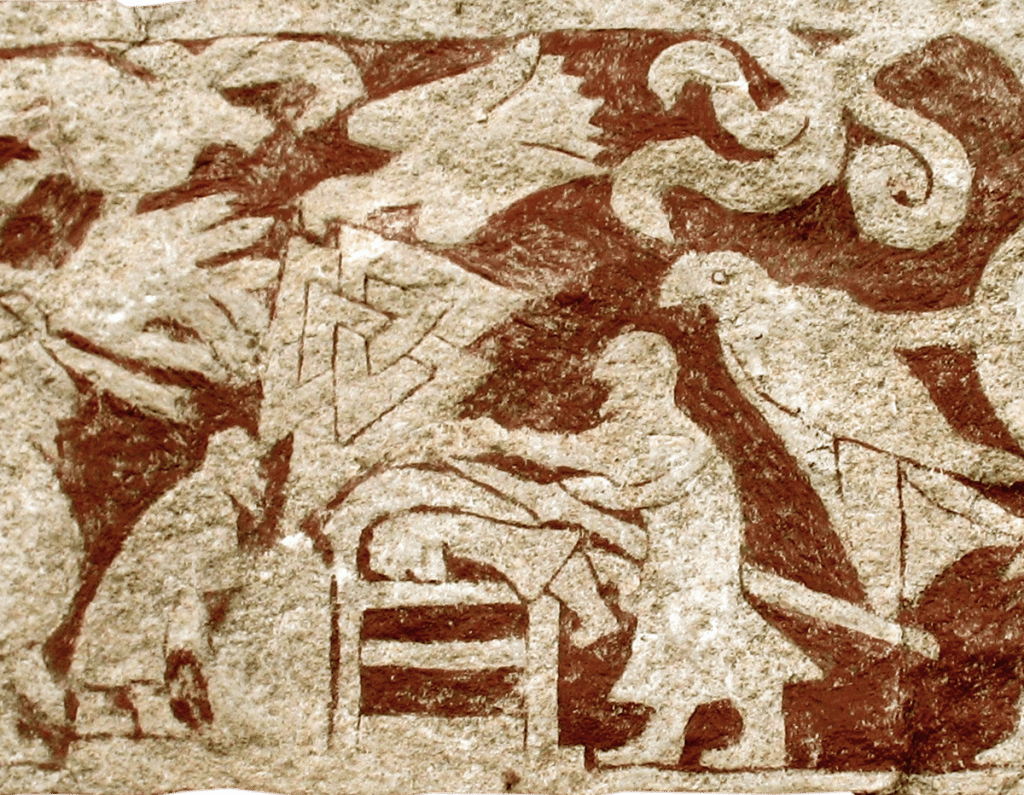
She finally did, and I was so scared I froze as dead; I couldn’t move or say anything. Rhonda was quite short, slightly overweight, and her blunt facial features (very appropriately) expressed aggressiveness. I was expecting anything from torture to just a simple shot to the head, but what she said utterly shocked me: she thanked me for putting her boring, honest, hard-working daughter in the hospital, for it made matters much easier for her, the mother. Rhonda’s goal when she escaped prison was to actually sacrifice Selma to Satan in ritual resembling a Blood Eagle execution in order to restore Julian’s to full physical and mental health. She needed me as a witness, and I dared not deny it.

So it turned out my punishment was having to watch all that. We went to an empty backyard illuminated with torches, death-masks and carved stones in the shape of dark hooded figures. The woman put Selma, prostrated, in a shallow blue-tiled pool, Julian lying face-up right beside. Rhonda had a special, cursed knife with a curved blade, and proceeded to cut away the flesh from Rhonda’s back with amazing precision – the blue pool turned red, and a white, gooey rib came out of Selma’s lifeless body. Rhonda recited a Latin prayer in guttural, entranced tones, and just like that, Julian was cured. The teenage boy got up with ease and walked away with his mother beside him, leaving Selma behind. I couldn’t believe how she could still be alive, but alive and breathing she was. I decided it was a sign that meant I could still redress my sins, so I took Selma to the hospital. Her whole back area was deeply hurt, and she needed many medical procedures, all of which I paid for myself. I stayed by her side and nursed her until she regained her strength, and we were both forgiven.

The Enemy

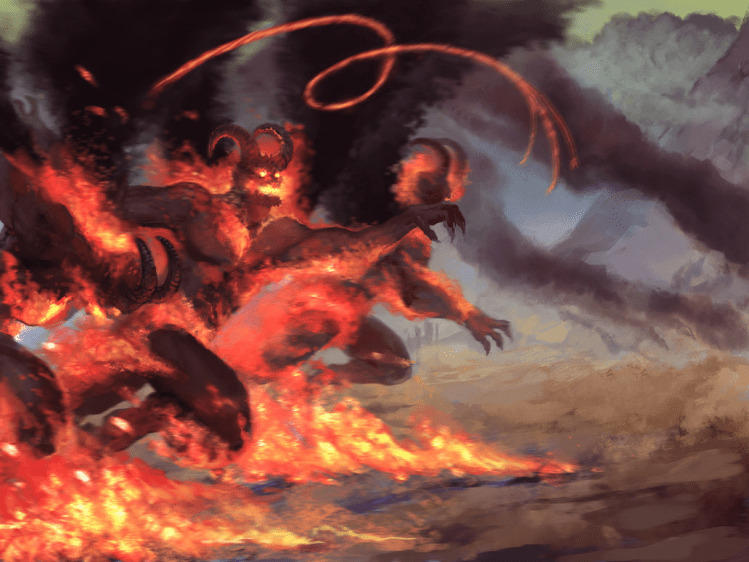
Today I dreamed that I was being raped by the Devil. It had the form of a muscular male with shiny red skin, and the scariest thing about him wasn’t the fact he was physically strong, or that he had pointy fangs like a vampire, or even the big sharp horns on his head. I was utterly terrified because he wanted to hurt me. His goal was to subdue me, lobotomize me through mental and sexual violence, nullify my own strength of will, control and dominate me. His most powerful weapon was his evil mind, and his knowledge of his victim.  He wanted to bring me to the point of collapse, a point where my body and soul would be so far gone that it would be completely at his disposal, and he knew how to do it most effectively. He made fun of me, pointed his finger at me , touched my writhing, disgusted body with his sharp claws, bringing about all my deepest traumas and making them look even worse than they already are, a proof of my brokenness, my weakness, my otherness.

He laughed and taunted me, clicking his beastly, forked tongue at my attempts of freeing myself, his ugly, scaly face distorted with lines arisen from an inhuman, humiliating laughter, and I knew there was no escape from this monster. He held me on his lap, like you would with a helpless child. His arms were cold and inflexible as an iron claw, but his grip didn’t bruise my skin – he held me in a sort of mockingly gentle complacence, but it didn’t make the situation any more bearable. On the contrary – it was a clear strategy that sought to overtake my agency, patronizing and demeaning every ounce of self-worth and all the little bits of strength I managed to build, at high costs and with much difficulty, over the years. He pushed forward, I scream and cried, and I screamed harder than ever as I felt his slimy, disgusting body forcing himself on me. I continued to scream and fight, but the pain became as cold as death, and fortunately or not, I woke up all with a scream, soaked in sweat.

Why not just “fortunately”? Is there a good reason why waking up from such a nightmare shouldn´t be the best outcome? The answer is that I wanted a chance to beat him. It is not enough to get away from evil – I need to overcome it, win over it at its own level, torture it the same way it tortured me. I wanted to scare him, make him feel less than the most worthless worm to ever squirm this ugly earth, make him scream and cry for mercy, make him suffer the same way he’d done to me. But I couldn’t do it, I tried but my unrest was so strong it woke me up – my own mind couldn’t process the anguish anymore, so the subconscious decided it was time to bring back awareness. Enough. Next time, I’ll prevail. Next time, he will be the one to quit, to back off and run, a scared little fuck creeping on the ground, shitting himself, his entrails made liquid, his tail between his legs.

The Mutagel

Matthew Ryan was a materials engineer turned security specialist who worked for the CIA. He had a daughter, Lisa, a five year-old who could read and write better than many teens, and whom he loved more than anything in the world. Her mother was Matthew’s ex-wife, a brilliant scientist. Carol was also a woman of stunning beauty: light copper hair, milk-white skin and piercing blue eyes. But she was ruthless when she was in the middle of a project. One day she simply didn’t come home after work, and Matthew found out a week later she had been sleeping at her office’s sofa, completely enthralled by new research. Her feelings of guilt as a mother were strong, but deeply buried. After all, no one could take better care of her little girl than Matthew, and no one could do her job better than herself.

After a few weeks, Carol moved in with a fellow colleague, Greg. When the divorce process was finally over, her relationship with Matthew had evolved to distant politeness. Her new boyfriend was as handsome as an old Hollywood star, a Robert Redford or Paul Newman at the height of their masculine grace: tall, broad-shouldered, with a strong jaw and an easy, bright smile. Greg and Carol looked like the ultimate dream couple: their faces could be on billboards, movie screens, or on the cover of fashion magazines. In reality, it was their names that headlined prestigious scientific publications.

Meanwhile, Carol, Greg and the rest of their team had been recruited by the United States Homeland Security Department to work on a confidential research project in partnership with the CIA and NASA. It didn’t seem possible, but they had discovered a material with special properties: it took the form of a super strong, flexible armor, like a skin-tight base layer worn by superheroes in comic books. It had the most bizarre appearance. It didn’t look quite solid, though it was a kind of translucent, formless gel. It didn’t look liquid either, though like water, it was supple and could take the form of other containers. It behaved like a transparent, gelatinous, whitish sort of clay, for it could be sculpted and molded as desired. Its origin was an extra-terrestrial ship engine that had crashed in the middle of nowhere, hence, the highest safety protocols were deployed.

Carol and Matthew had shared custody of their daughter. But because of their job, Carol and Greg had been relocated to a secret research facility. She took Lisa with her, something Matthew agreed with when he was assured by the CIA director herself that the facility had been magnificently prepared to provide the children of officers and researchers with the best education in the world. Matthew just wanted what was best for Lisa, and so it was. They talked on the phone almost every day, and every time Lisa told her dad about all the new things she was learning, about her new friends, and about how Greg was in fact a really funny man. But she also constantly mentioned how much she missed her dad.

One day, Lisa didn’t call, and on the day after that, Matthew called Carol. No answer. He decided to reach out to Greg, but he didn’t really expect him to pick up, and Matthew assumed at first that they were just busy with work. A few days passed without news. Matthew grew worried and decided to go after them. He called his contacts from the agency and demanded to talk to his ex-wife. Nobody could tell him what was going on. His previous CIA director owed him one, and that is how Matthew managed to get the necessary security clearance to enter the facility and see his daughter again.

A fleet of trucks filled with soldiers and explosives was on their way to the research facility, and Matthew got a ride in one of them. The location was protected by the US Department of Defense Aegis Ballistic Missile Defense System, but it wasn’t inaccessible – though the road was dangerous and seemed to go on forever, winding up and down on the edge of high precipices. The trucks went on. Matthew noticed sharp, rocky valleys, river gorges, snow-tipped mountains with dark-green slopes covered by pine trees, and sand deserts. The trucks went on some more. The road became misty and pale yellow: a dust storm.

It took 12 hours. “By the time we arrive, the test will be over”, Matthew heard an officer say. After going through the security check at the huge entrance gates, he went straight to Carol’s current home, a tiny but well-furnished apartment. He knocked and called, but no one answered. He tried turning the knob, just in case. It was unlocked. That struck him as very odd. Everything was still, as if no one had been there for days – it was an eerie sensation. He looked and looked, but there was no sign of Carol, not even Greg – even the sight of that bastard would have given him some relief. But the cold hand clenching his chest was called Lisa: there was no sign of her in that place.

In the middle of his search, Matthew was startled by someone knocking on the door. He was scared and opened it cautiously. It was one of the officers he had shared the ride with, Lieutenant Cooper, followed by a high-ranking official – an Army General, assuming from the four stars and countless other badges pinned on his uniform. The man introduced himself as General Carter: “Mr. Ryan, I came as soon as possible. There was a problem during the test”. The General looked grave, his deep voice booming at Matthew’s strained ears. “Dr. Carol Grant and Dr. Gregory Rodd have disappeared”.

A graveyard-worthy silence. “What? Where is my daughter? What happened?”, asked Matthew.

The General answered: “Unfortunately we cannot explain what happened to your ex-wife, Mr. Ryan. But your daughter is with us – she is quite safe in our underground head-quarters, so no need to worry about that. I understand if you would like to take a minute to rest, but –

“No, I’ll go with you right now. I need to see my daughter”.

Matthew left the gloomy house with his hopes a little less shattered. His daughter, it turned out, was really quite alright. He saw her from a distance, through a one-way mirror. She was asleep, and only then, when he noticed how normal she looked, still unaware that something had happened to her mother, did the knot in his throat seem to slacken. But now he was worried about Carol and – who would have imagined – Greg. General Carter looked like a man who had aged ten years in ten hours. Fortunately they had footage of the accident, and Matthew could add his expertise to the team in order to find out what had happened. The footage showed a tall black man wearing what seemed like an armor made of the gelatinous substance. General Carter explained he was an astronaut called Thompson and was now under strict observation at the hospital wing of the underground complex. “You’ll see why”, the General added.

The general played a video that showed Dr. Thompson approaching what looked like a crashed extraterrestrial spaceship and proceeded to assess it, as would a mechanic do with a broken car engine. He walked around it, reporting the damage and describing its features. Carol and Greg were enclosed in a metallic cage with a foot-thick temperate glass window about ten meters away, checking Thompson’s vitals and the armor’s response to the different levels of radiation. Thompson approached the exposed engine at the ship’s rear. Suddenly, there was an explosion, and the gooey, transparent material that made up Dr. Thompson’s armor went everywhere, as if it was multiplying out of his suit. Carol and Greg got hit by the substance and simply vanished, their containment structure having served no other purpose than blocking shards and debris from the spaceship’s engine. Thompson, on the other hand, suffered no visible alteration, except that part of his helmet was torn apart, exposing the left half of his face to the now tainted environment. He staggered and removed his gloves, his desperate hands scanning his own face in search for signs of injury.

“It happened 76 hours ago. And that’s basically it”, said General Carter dryly. “Our rescue team took Thompson out of there straight to quarantine. He’s being monitored day and night, obviously – he pointed to the left, where a cluster of screens showed the apparently uninjured Doctor Thompson pace up and down his gloomy, bare-looking containment room. The General continued: “The containment booth where Dr. Grant and Dr. Rodd were working is exactly as it was before. It seems that the Mutagel – sorry, I forgot to say that’s what we’re calling it now – the Mutagel has infiltrated into the reinforced glass windows and artillery-resistant metal walls, and ‘chose’ the only two organic beings in the vicinity, attaching itself to their bodies. In all our extensive previous tests, the Mutagel had never had any particle-destroying effect on organic matter. It just naturally turns itself into a shielding armor, but the wearer remains whole and visible, as we can see from the example of Dr. Thompson”. The General looked inquiringly at Matthew.

He understood the implied question in just a few seconds. “No, she never told me anything about it. Carol was” – he caught himself right on time. She wasn’t dead yet, after all. – “Carol is… she has always been extremely secretive about her work, even when it’s not particularly sensitive or confidential. This is a top-secret project, right? Carol would have kept it that way. I can assure you I never heard wind of this… this Mutagel thing, not from her, nor Greg, nor anyone”. He concluded with a tired voice.

“Well… I believe you.  We scanned the area in all possible ways to find traces of Dr. Grant and Dr. Rodd, but nothing showed up so far. Except for this” – The General was now directing Matthew’s attention to a side monitor, where several cameras continued to record the accident perimeter in real time. Matthew noticed a weird blurry shadow disturbing the atmosphere, similar to a mirage effect caused by hot air above tarmac. It moved up and down the screen, but had no distinguishable shape. Sometimes there seemed to be two of them – whatever it was, and sometimes the screen surface looked flat and normal again.

“When did you fist see this, this rippling effect?” – asked Matthew with curiosity.

“A few minutes after the accident. We haven’t of course been able to send anyone back there, but our instruments keep working. They seem to pick up higher temperature levels whenever this… this disturbance comes near one of the thermometers. The dosimeters also denote higher radiation levels…” , answered Carter, dryly.

“You do realize that this can be another property of this Mutagel thing, right? That Carol and Greg are dead and this Dr. Thompson might be going the same way? – said Matthew in an earnest and slightly desperate tone to General Carter. But he hadn’t reached the end of his wits, not yet. From all he had seen so far, all the secrecy and concealment in the General’s manner, and from everything he knew about Carol – who could be said to possess many flaws as a wife and mother, but never as a scientist – no, he was sure the key to the question was the brave, mysterious and now quarantined Dr. Thompson. He took only a few seconds to reach this conclusion, keeping an eye on the accident site monitor and the other on the screens that showed every corner of Dr. Thompson’s room, where there was now the same air rippling mirage effect from the accident site, exactly around the area where Dr. Thompson stood. Suddenly, Thompson vanished. The General immediately grabbed the secure line and called the hospital wing, unable to keep his voice steady anymore, his face shining with nervous perspiration. For Matthew, that was it, the last straw. He took a quick look at the facility’s plants spread on the General’s work station, grabbed the distracted man’s clearance ID and put on a hazmat suit he found in the storage room – he was already packed with his good old Glock pistol. Walking resolutely out of the underground labyrinth and taking a last look at Lisa, who was still slept peacefully, he went straight to the secured area where, he hoped, the origin and the end of the problem would lie.

At the entrance, there was a concrete wall and a tunnel, where a robust, 50-centimeter thick metallic gate barred his way in. He held General Carter’s ID card over the optical reader, and the gate opened noiselessly. The tunnel lights ignited as he walked, turning off immediately after him. Matthew couldn’t help acknowledging a curious feeling of being watched, a nagging impression he’d been feeling ever since he’d left the underground complex, although he had checked a thousand times and was visibly utterly alone. In ten minutes he reached the other side of the tunnel. A vast open space awaited him, and he noticed, now in person, the same rippled air effect he’d seen in the control room on the monitor screens. Matthew approached the still intact glass structure where Carol and Greg had observed Dr. Thompson testing the Mutagel armor, the dosimeter he’d taken along beeping more frequently with each step he took. He hesitated, walking cautiously towards the so-called “mirage”. There were two of them, and from this short distance he could see they were transparent beings that moved and took the appearance of the surrounding environment, but still retained a human-like shape. These strange chameleons began to stir and shake as if they wanted to move; the dosimeter’s needle went crazy, and Matthew realized they must be Carol and Greg, struggling to communicate, to tell him what to do.

The figures shook and stirred like they were trying to break out of a straight jacket, and after a few seconds of muffled grunting, Matthew heard words in Carol’s crystal-clear, but at the moment, desperate voice: “behind you!”. The warning was useless, for he had already felt hands, mighty hands that clamped like iron pliers around his chest, pressing all the air out of his lungs – an invisible snake crushing its prey. Barely able to breathe, Matthew was thrown away with the force of an elephant, landing close to the radioactive wreckage of the space ship’s engine. He felt, rather than saw, a tall and powerful human form advance towards him, and he knew that this was the end – his end. It came closer, and then he noticed: it was a sort of transparent air disturbance, readily changing its appearance to match its environment, thus being almost invisible – except for the left side of its face: Dr. Thompson’s face. The other two transparent beings, which Matthew now knew to be Carol and Greg, began to shake ever faster, their almost invisible contours approaching Dr. Thompson from behind.

Dr. Thompson didn’t notice; his whole attention was fixed on the ship’s engine, lying a a few meters beside Matthew. A ghostly, anguished voice came out of Dr. Thompson’s invisible mouth:  “I knew you’d figure it out. I know what you want to do…” his voice broke, but when he spoke again, it was calm and controlled. “You see, this engine is where the Mutagel came from. The armor doesn’t work, and I need to feel whole again. I can’t let you destroy it. I have to kill you, I am truly sorry” – he said, though he didn’t look it.

Matthew’s pistol had fallen meters away, behind Thompson. He instinctively held his hands up and tried to argue his case – his mind was on Lisa: “Thompson, please, I can help you. Just let me take you back to the base, we’re going to figure it out together, I’ve just arrived, you know what I can do, you have to believe me… We’re going to make you whole again” –

He was cut short by astronaut’s cold and steady voice: “We’re not going to do anything together, my friend. It pains me to say this, but this is where it ends.” Matthew’s pistol was apparently hovering in the air, right behind Thompson. Who held it? Matthew couldn’t say. Exactly when Thompson took a step forward, whoever was holding it aimed a shot not at Thompson, but in Matthew’s direction. The bullet passed right beside him and hit the engine instead – the mysterious and dangerous substance which had been the scientist’s whole world for months exploded like a cold, pale mushroom cloud, the air around them sizzled like fireworks, Matthew’s skin stung with heat, and then he felt no more.

Red Pool

I was watching a TV show at my oma’s house. In the living room, there was a small bed, a comfy couch and the TV: snug and cozy, this was my little den, my nest, my burrow. The show was a police drama about a serial killer who wore a mask – a dirty grey rag with indistinguishable black shapes, not dissimilar to the one sported by Rorschach in Watchmen, but this psycho’s mask remained the same, that is, the inky blots on the filthy rag didn’t move at all. And instead of a hat, this man wore a neutral-shaded suit. After only a few minutes watching the show I started to feel threatened by him, as if the show were more than a work of fiction, a real-world instance of wicked, nefarious, malignant evil. I felt like I was being watched and ran up and down the house, making sure all doors and windows were securely locked.

The gruesome details of the murders realistically shown on the TV started to affect me. There were not only flashes, but clear-cut scenes and close-ups of guts, entrails, flesh and bone ground together, dismembered bodies, and such an amount of blood, that left no doubt in viewer’s minds about those cuttings being made while the victims were still alive. Thinking about the gory details made me want to find out his identity for myself: if I did, something terrible could be prevented; if I didn’t, well… I was sure he was going to come alive, out of the realm of imagination, find me and kill me in the most cruel, painful and hideous way possible.

It felt so real. As a matter of urgency, to avoid this terrible destiny, I had to unmask his identity and put an end to his monstrous existence. I would have to dive into the show, imagine myself so well-inserted into the story, experience the fear so close to my own skin, that the fiction would become my reality. I ceased, then, from being a spectator. I was now an active participant, and it wasn’t just a TV show anymore. It was really happening.

                                    *  * *

I was an investigator at the police department in a small American town. There was a killer on a spree and he seemed to choose his victims randomly. I worked on a team of several other smart and experienced officers; it was only a matter of time until he made a mistake, forgot one little piece of fabric, or was seen by some offhanded witness, or left behind a little bit of spit, or hair, or skin, or anything we could use to track his DNA. But the investigation was stalled. There was nothing new to track, no witness to interview. We were seated in front of our computer screens, our bored asses moving up and down the precinct to get another cup of coffee or another sugary, heart-disease-full doughnut. The journalists were having a ball. The media weren’t helping either; newspaper headings stated the obvious, plus a catchy nickname: ” ‘The butcher’ eludes authorities – citizens terrified”.

A message came on the fax machine and pulled us out of our reveries. I was close to the machine and it seemed to be written in some kind of coded language, but addressed, in plain English, to our colleague Martin, the antisocial, introverted, most relentless detective of the team. It was due to his work that the police had now a rough idea on the physical build of the perpetrator and a psychological profile that told us he was, most likely, a straight white male between 35 and 50 years old, an only son with mommy issues and had a background in the Army or Navy special forces.

Martin read the letter as if he could understand the code at a glance; he took his gun, cellphone and coat and left in a matter of seconds, without talking to anyone. We all gathered around the fax, but the message wasn’t there anymore: Martin had probably taken it with him, making sure its contents would stay secret. Work was slow and the killer had, apparently, decided to take a break as well. A good sign, for it meant we (or someone else) were getting closer.

As six P.M drew near, officers started turning off their computers, putting cups back by the coffee stand, getting their belongings and going home. No one mentioned Martin and the mysterious message. But I had a hunch it was important. I stayed and tried to figure out if there was any sort of record of the message stored in the “cloud” or in the fax machine. Hell, I couldn’t even name it properly. I called the IT guy, but obviously, he had already left. I needed to see that message right away, and Google told me how. I typed CANON FAX-L170 on the search engine and prayed that Martin hadn’t deleted the record… and there it was. Job History -> 04:57 PM Received #556.

I printed it out, and almost laughed in relief. It wasn’t written in a secret code, but in Russian. I had of course to type in all the correct characters into the online translator, but it all worked out. It said simply this: “You know who I am and what I’ve done. Below there is a time and a place. Come alone, or your wife and children will suffer the consequences”. The address was of an old warehouse in the outskirts of the presently abandoned industrial quarter of the city, miles away from any other human being. Never in a million years would a hardened cop fall for this… but how could I be sure?

As I examined the sender ID, another shock: it had been sent from that very room. I searched around and noticed I wasn’t completely alone – Ted, a hard-working, powerfully-built cop, was still plugging away at his computer. David, the toughest of them all, was also there, apparently fascinated at some article he was reading online. But there had been at least 20 people there when Martin got the message; besides, the sending of the fax could have been programmed in advance, thus, the record didn’t really mean much by itself. If I wanted to catch Martin and his mysterious correspondent, I had to leave immediately. I was almost sure it was connected to the killings. I jumped into the car and drove as fast as I could, making sure to call for backup as a mysterious negative omen took control of my thoughts.

I arrived at the warehouse a little after 10 PM. It was completely dark, except for a light bulb hanging from a cable in a corner of the room. I scanned the place with my flashlight, gun first. Suddenly, the single light went out with a fizzling noise, and in these few seconds I felt strong, powerful hands close around my mouth and body; the stranger quickly disarmed me and held me in a half-nelson, face down. I was paralyzed in fear, could barely breath, my neck almost breaking under the pressure. A needle stung me, and I passed out.

When I came to, I was in a top corner of the building, where I could see most of the ground floor – the light bulb was on – and the moonlit main entrance. I was completely bound by ropes and gagged. The numbness and heaviness told me I was still under the effect of drugs; I was tied in such a way that I could barely move my head. I could only observe, and what I saw made me want to scream. But no sound came. I was as if stuck in an endless nightmare, the difference being that with a nightmare your fear wakes you up, and there was no waking up from this hellish torment. I heard steps on the gravel walk outside, and Martin came into view. As soon as he entered the building, the electricity went off again. I thought he had seen me, or at least, noticed something moving on the top floor, but I couldn’t be sure.  Through a carefully planned trick of lighting, my colleague was kept under a beam of moonlight, the only outside light source.

Martin had his gun, but not his eyesight. Whoever had done it, remained in the shadows, thus preserving his identity. Suddenly, movements were seen in the opposite side of the warehouse; gunshots pierced the still darkness, but I could see perfectly: it was a ruse. During these crucial seconds, while Martin fired blindly at an elusive and probably fabricated target, the stranger had approached him in complete silence and overpowered him, just like he had done to me. And this stranger wore a filthy grey rag over his face and a neutral suit. It was our serial killer, and he was going to kill again.

I was transfixed, watching my helpless colleague from above, as if my body wasn’t really there. The murderous monster tied Martin up around a chair, and slowly he regained conscience. But unlike me, he screamed and screamed. And when I saw what the killer had prepared for him, the tools he would use, I too let out a muffled wail of horror. Martin was cut up in pieces with a handsaw. I could see everything, how that butcher tortured him, protracting the slicing movements and stopping the bleeding with plastic ties so that Martin would suffer longer; how blood and body parts started to all look the same, so that I couldn’t discriminate hands from feet and arms from legs; how, finally, his screams just stopped and the killer let out a grunt of satisfaction, as if he had just achieved sexual climax with all the carnage.

It was a bloodbath, but it could have been worse: I was still alive and whole. Blue lights flashed in the distance just as Martin was decapitated with a machete. I had the distinct impression he would have used the handsaw otherwise and stayed there for a little while more, jerking off among the blood and body parts. With a condom – he wouldn’t leave evidence behind. But he was in a hurry. As the police sirens howled, he simply ran into the darkness and disappeared.

                              *  * *

I couldn’t sleep. After I had been rescued and patched up, I withdrew from the case. A few months went by and bodies were still showing up all over the city. Now a connection was clear: porn stars, erotic dancers, prostitutes, their pimps and clients, all found dismembered with signs of torture. Flashes of the night Martin had been murdered kept popping up in my head in the middle of the night. I woke up screaming myself, after listening to Martin’s screams in my nightmares. But this time I distinguished some words amidst his agonizing howls: something familiar, something that made sense that came from the killer. I decided it was time to go back to work, find that sadistic motherfucker, and take my time killing him.

In the meantime, forensic evidence from this Martin’s crime scene revealed quite accurate figures about the perpetrator’s height, weight, shoe-size, and the fact he was left-handed. I felt utterly alone; nobody in the force seemed to be willing to suspect their own peers, so I decided to test Martin’s suspicions (that the killer was a cop) and my own (that he worked with us in the precinct). I waited for everybody to go home and cross-checked the killer’s body specifications to the department’s whole cohort of officers and the results were clear: a perfect match with Ted and a close fit with David. I hid the report in my desk drawer and locked it. I was alone there, so I took the chance and rummaged through their things.

A few minutes passed and suddenly, a voice startled me: it was David. He asked what I was doing, and I told him I was searching for the notebook Martin used to keep – he had it with him when he was killed. David said that the journal was locked in the evidence room – obviously. He laughed, but something in his voice scared me – the tone, accent, I couldn’t really say. My instincts told me to lie, pretend I was confused and had no hopes of ever finding the killer. I said I was going home, mentioned something casual about needing to water my plants, and the fact he just said good night politely filled me with puzzled relief.

That same week, we found another body – or rather, parts of it. The victims were a male and a female; both had been sexually violated, tortured and killed. There was a video, recorded by the killer himself. He wore his dirty mask and a dark suit that covered his whole body. He never spoke clearly, but grunted with pleasure at the carnage, moaned at the physical effort he put into cutting, sawing and grinding his victims, as if it were the ultimate sexual delight. There was something familiar about his voice, or rather, the tone of the grunting, the cadence of the moaning. I had to watch it over and over again, scrutinizing the scenes for details – sounds, expressions, movements, anything at all. The image quality was terrible: dark and grainy, like a poorly-received TV channel, which helped the killer conceal his identity and actually help me not to vomit.

And then it hit me, as I examined the film in the media room for what felt like the hundredth time. It was David’s voice. That day, I made sure the floor was completely empty before starting my search. I managed to break into David’s locked desk drawer, and there it was: Martin’s journal. And what’s more, there was a collection of newspaper articles about “the butcher”. I had the curious and uncomfortable feeling that I was being watched – again. I went home. It was a desolate place, as my plants and flowers were almost all dead now. I didn’t sleep at all, but rather mounted a barricade and kept my Smith and Wesson in hand.

On the next day, I just didn’t show up to work. The phone rang, and I picked it up. It was David. He asked how I was feeling; said he assumed I was sick, and asked if there was anything he could do for me. I said I was fine, and that I would probably be back to work soon. He asked: “are you sure?”. I answered in what I intended to be a casual tone: “yes, why?”. He told me: “you should be careful. There is a bad virus going around, you know, very dangerous for people with a delicate constitution like yourself, and I wouldn’t want you to be caught too. In the meanwhile, don’t forget to water your plants. Your violets are looking completely done, aren’t they?”.

A Journey of the Soul

I traveled on foot through in an exotic land. It was a place where tall sea cliffs and orange sand dunes merged seamlessly, and with every day that I walked, subtle changes in the landscape afforded new perspectives of unbelievable beauty. Every sunrise and sunset was worthy of a painting: sand, rock, sea, and sky in endless visions of colorful warm light. My nights were spent at the coziest, most comfortable lodgings a rustic and remote area such as that could offer. They stood on the further side of sandy elevations, protected from coastal winds, lined by an arid, weather-beaten vegetation, surrounded by sandbanks. These wooden houses stood at precisely a day’s calm walk from each other. The distance was so that I could a spend the night at the cabin and in the morning resume my stroll with no rush. I walked the day away free from worry and from the disfigurement of pollution, crowded apartment buildings and other human spoils. My path showed only the beauty of nature. The only human interventions were these cozy cabins, put there so as to provide the right amount of material comfort to facilitate the human experience of the divine, in service of the journey of the soul. I walked the day away and, right before sunset, there was another such cabin awaiting my weary feet, a snug room with a soft mattress embracing my tired limbs, huge windows allowing for a broad view of the waves, well-made wooden panes filtering the moonlight, the sound of the ocean leading me to a peaceful night’s sleep.

My only difficulty was choosing the next path: I could either go along the coastline by boat, where I would have an imposing view of the looming cliffs and its lower ramparts, the angry waves foaming as they broke against the rocks; or I could continue by land as I had been doing until then, following wild pathways over the sandy terrain that bordered the shore, where the sight of sea waves breaking against the rocks greeted me every minute of the journey.

I chose the land track instead of the ocean, and went ahead. Other travelers and pilgrims walked along that same sandy road, and for the first time since the beginning of the adventure I had to deal with other humans. I hadn’t advanced much when I realized I was inside a huge castle right at the edge of the cliff. Its man-made foundations were so gradually blended into the geomorphological compound of the naturally-built rocky precipices, that it seemed to emerge from the ocean depths just as an ancient fortress in the lost island of Atlantis. It was, however, not an island, and the surrounding land stretched infinitely in a harsh, barren, and completely desert country.

Each room of the fortress had a different color, reflecting a distinct mystical and spiritual property: there were rooms with monks, priests, rabiis, fakirs, druids, sorcerers, and witches. Others were empty, but invited me in with their intricate architectural delights, so that each step led to the contemplation of beauty and a subsequent meditative attitude. In one of the simplest rooms, I caught sight of the ocean through a side window. The contrast of the room’s yellow and orange walls with the deepest blue of the ocean left me positively bedazzled, and I had a wish to travel even further, to a land even more unknown, a far-away place that would bring me healing, peace, and understanding.

As if some superior being had heard my silent prayers, I began to hover weightlessly over the temple. I floated through the air as if it were water, or as if I were a most gracious mixture of bird and human being. From up there, I took notice of a confined area in a corner of the fortress; it was a side-room, connected to the main building by a narrow causeway. Approaching it from the air, hovering above it, I realized it was a prison cell, for there were bars blocking all windows and the only door. The atmosphere around it wasn’t dark or heavy; it conveyed, rather, atonement and renewal. I prayed for the inmates, for their spiritual illumination, and for their being able, like me, to fly over the temple and relish in that beauty made of water, sand, and stone.

From then on I traveled by air, flying like a bird. I hadn’t travelled long when I reached my destination: it was another exotic land, where, again, every corner revealed a new, fantastic discovery. There were mandalas with precious gems, Buda statues, images of saints and mystical figures, all in bronze, gold, and stone, greeting me in every street. Street signs and shops were in a language written with intricate, beautifully-drawn characters I had never seen before, yet somehow they were not completely unintelligible, but rather familiar. There were women wearing veils, men with great black beards, their dark, piercing eyes half-hidden under colorful turbans, surrounded by orange rocks and yellow dunes that melted into a blurred, pale sky, as if land and heavens were bound together just a few hundred meters away, bringing me closer to the horizon, and the desert landscape was the embodiment of divinity itself. There I rested.

Suicide of the Ego

I was at a birthday party and I got so incredibly drunk, that on the following day I couldn’t even remember my own name.  I had no idea of who I was, where I was and where I’d been, if I had friends who could rescue me from that situation, if there was any record at all of what had happened, where I could go, if I had any ID or belongings that would help me figure out who I was, among other little things we can usually pinpoint, no matter how intoxicated.

The acuteness of the blackout led me to the conclusion that it most likely wasn’t just another drinking spree, but that someone (or even myself), for some reason, had given me heavy drugs, whose side effect was total amnesia. I decided, as would a detective on a procedural police TV show, to examine my own body in search for evidence. There was something on my left foot that looked like part of a tattoo; the same on my right hand. I removed my long-sleeve T-shirt and pair of jeans, and what I saw left me in a state of total shock.

There was a huge tattoo covering the left side of my body, from the thigh, over the ankle, ending on the foot, enveloping my entire leg. On the right side, my arm was also altered, but it wasn’t only decorated with a tribal-themed full-sleeve tattoo: it had a hole, a literal half-moon-shaped hole, completely cured and healed, as if chiseled by an artist in a piece of clay, as if my flesh wasn’t human, as if it didn’t bleed, or it didn’t hurt. But it was really healed, and it really didn’t hurt. No, my flesh was nothing but carving matter, and my skin nothing but a canvas: something blank, with no personality or sense of self, an amorphous mass, upon which anything can be printed, and into which anything can be shaped.

Both tattoos were strongly colored. The left foot was covered with a triangle-shaped pattern in black, red and other darker shades, the same geometry extending up to the hip. On my arm, I had a large mystical circle, like a mandala. At closer examination, I realized it was a Mayan or Aztec calendar; the central circle, where the sun-stone usually stands, was where my half-moon crater stood. I wondered if I could still be under the influence of hallucinogenic drugs, for as I tried to discern the drawing in the middle of the calendar, it seemed to become a sort of stage, surrounded by concentric grandstands: an amphitheater in ancient Rome, shaped like a half-moon indentation, right on the top part of my arm.

Looking at them left me desperate. It’s not only the I didn’t like tattoos, but the fact the ones I was sporting, those huge, colorful, statement-making, body-enveloping drawings, were the last kind of tattoo I could ever be prevailed upon to have, under any circumstances. Adding the actual flesh-carving to the drawings, however, was the icing on the cake, or rather, the fly on the pile of shit. They represented, for me, an instance of self-mutilation, a suicide of the ego, a disrespect towards God and Nature. That much, apparently, I hadn’t forgotten about my previous life.

Could I have the tattoos removed? Maybe, but it wouldn’t work for the hole in my arm. Plastic surgery would help with that, but still I would have nasty scars for the rest of my life. I had no money, so that was out of the question anyways. I had no friends, no possessions, and no name, as far as I knew. Why did I worry so much about this obliteration of an identity I couldn’t even remember? I could struggle and despair some more, but it wasn’t going to make it any easier. The only alternative left was to conform, like the shapeless, supple, moldable material that I was. So I embraced the idea of becoming someone else, change personalities, or rather, assume as my own this other, strange identity, chosen by chance in a moment of insanity. Maybe as I saw things from the perspective of this new me, I would be more adventurous, more fearless. Maybe I would be happier.

After this realization, I remembered my mother and where she lived. It turned out I was there, in the same old house I was brought up. She was horrified at my tattoos, but she said she loved me no matter what. Right at that moment, the inked drawings changed: the tribal symbols and geometric shapes disappeared and gave way to branches of red flowers, like peonies or roses, connected all over my leg up to the hips with leaves and stems in various shades of green and brown. They were even bigger than the ones before, and much more beautiful and delicate. The half-moon-shaped hole was still there, but it looked softer now, as if it were a natural part of my anatomy. Was the new design a reflection of my new-found identity? Was my self-worth always going to depend on the acceptance of others? If my mother had rejected the new me, would the designs have changed at all? Would I ever accept myself for whatever the fuck I was?

The necessity of belonging to a group is one of the defining traits of human beings. Maybe I couldn’t remember my friends because there was nothing to remember. My own personality must have been so fluid that the slightest wisp of wind was enough to take it away, with the exception of childhood memories and stupid prejudices. Maybe it would be easier now to feel as part of a community – the rebellious, the inked, the freaks with holes in their flesh that they carved themselves. Maybe that’s why they carved and marked their bodies in the first place: to make it clear to themselves and other lost souls of the world who they were, so they wouldn’t forget. To simplify the identification: no need to talk, just one look is enough, and you can find your peers, yourself, your world, and feel a little less lonely.

The Author

It’s a dangerous business, Frodo, going out your door. You step onto the road, and if you don’t keep your feet, there’s no knowing where you might be swept off to.

– J. R. R. Tolkien, The Lord of the Rings

Letting the words come through my fingers, then through the pen and onto the paper sheet, a permanent scar on an otherwise blank surface – doesn’t that mirror the (other) way (around) we experience life? I have always been blessed (and sometimes cursed) with considerably realistic dreams and the capacity to remember them. Paired with an overactive imagination, I use these memories to create little stories based on my dreams. My aim is to share a little of my weird inner self in the hope others like me will find solace, and those unlike, understanding.

Everyone wants to leave a mark in the world. This instance may not be a deeply-carved, well-designed or particularly competent one, but it is my own.

Design a site like this with WordPress.com
Get started